It doesn’t take a dramatic fall to feel far from God. Sometimes, all it takes is a slow fade. It could be days without prayer, weeks without Scripture, and a heart that feels more numb than nourished.
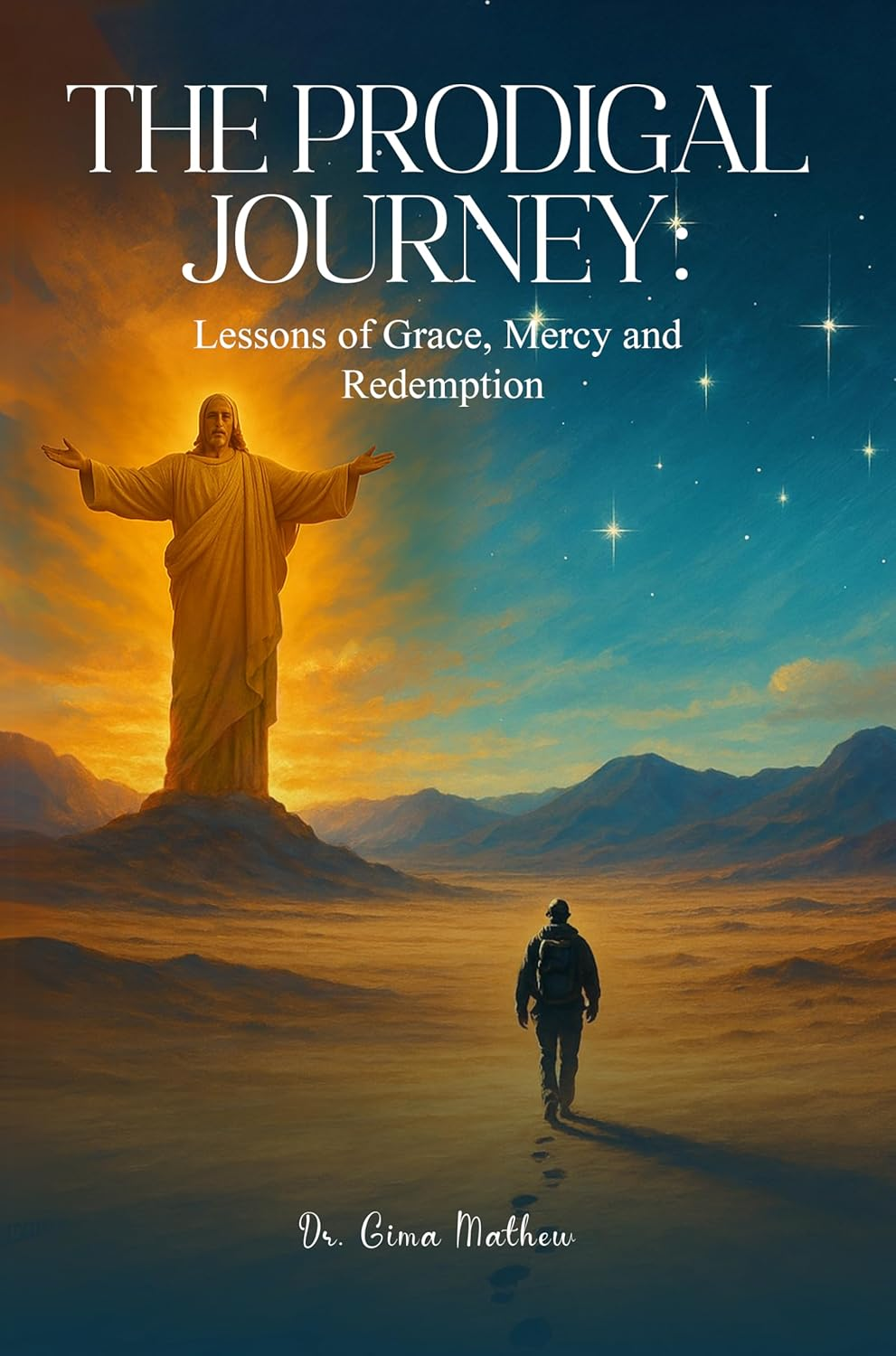
Many of us have experienced this kind of spiritual drifting. It’s not always marked by rebellion or resentment. Often, it’s just distance. Life gets busy. Doubt creeps in. Emotions grow cold. But even when we feel far away from God, the truth remains—He has never stopped watching the horizon, waiting for our return.
In The Prodigal Journey: Lessons of Grace, Mercy and Redemption, Gima Mathew offers a tender, Scripture-based guide to help us find our way back. Inspired by Jesus’ Parable of the Prodigal Son in Luke 15:11–32, this book doesn’t just retell the story—it invites us to live it.
In the parable, the younger son doesn’t leave overnight. First, he asks for his inheritance. Then he journeys to a distant land. Then he squanders it. Only after hitting rock bottom does he recognize how far he’s fallen.
Mathew writes, “Despite being under his father’s blessings and having everything he needed, he did not realize it.” That’s a message for us too. We may be spiritually blessed, but unaware of how we’ve slowly disconnected from our source of strength.
To return, we must recognize the distance and humbly decide to turn back.
The turning point in the parable is when the son “came to his senses” and said, “I will set out and go back to my father” (Luke 15:18). He didn’t know how he’d be received. He just knew he needed to go home.
Mathew also highlights the son’s humility: “He even planned how he would approach his return… declaring himself unworthy.” This posture of repentance is key to coming back to God. It reminds us that we don’t have to be perfect to lead back to God. Instead, we just have to be honest and brave enough.
Returning to God doesn’t require eloquence. It requires a sincere heart and the courage to say, “Lord, I need You.”
One of the most powerful insights in The Prodigal Journey is how the father responds, not with punishment, but with compassion. “But while he was still a long way off, his father saw him… ran to his son… and kissed him” (Luke 15:20). Mathew emphasizes, “This moment is central to understanding the father’s heart.”
God doesn’t wait for us to clean up before welcoming us home. His love outruns our shame. That’s the heart of the Gospel—and the soul of this book.
Jesus’ Parable of the Prodigal Son shows us that the father didn’t just forgive. He restored. He gave the son a robe, a ring, and a feast (Luke 15:22–24). The father’s compassion overshadows the son’s sinfulness… showing that God’s goodness is what draws us to repentance.
When we return to God, we’re not put on probation. We’re celebrated. His mercy covers not just our past but our future.
No matter how far you’ve wandered, no matter how long it’s been, you can come back to God. The Prodigal Journey shows that the first step is the hardest, but it’s also the most beautiful.
You’re not disqualified. You’re not forgotten. You’re deeply loved.
So come back. The Father is already running toward you.
For more information and insight, please read The Prodigal Journey: Lessons of Grace, Mercy and Redemption.
The book is available on Amazon: https://www.amazon.com/dp/B0D4X4556D