In a world marked by broken relationships and emotional distance, stories that restore hope and offer healing are essential.
Even though we hear about God’s love all the time, it can be hard to grasp what that really means in day-to-day living. We struggle with failure, guilt, pride, and the fear of not being enough. In these moments, it’s easy to forget the truth of grace. But every now and then, a book comes along that reminds us of the heart of God through storytelling that touches the soul.
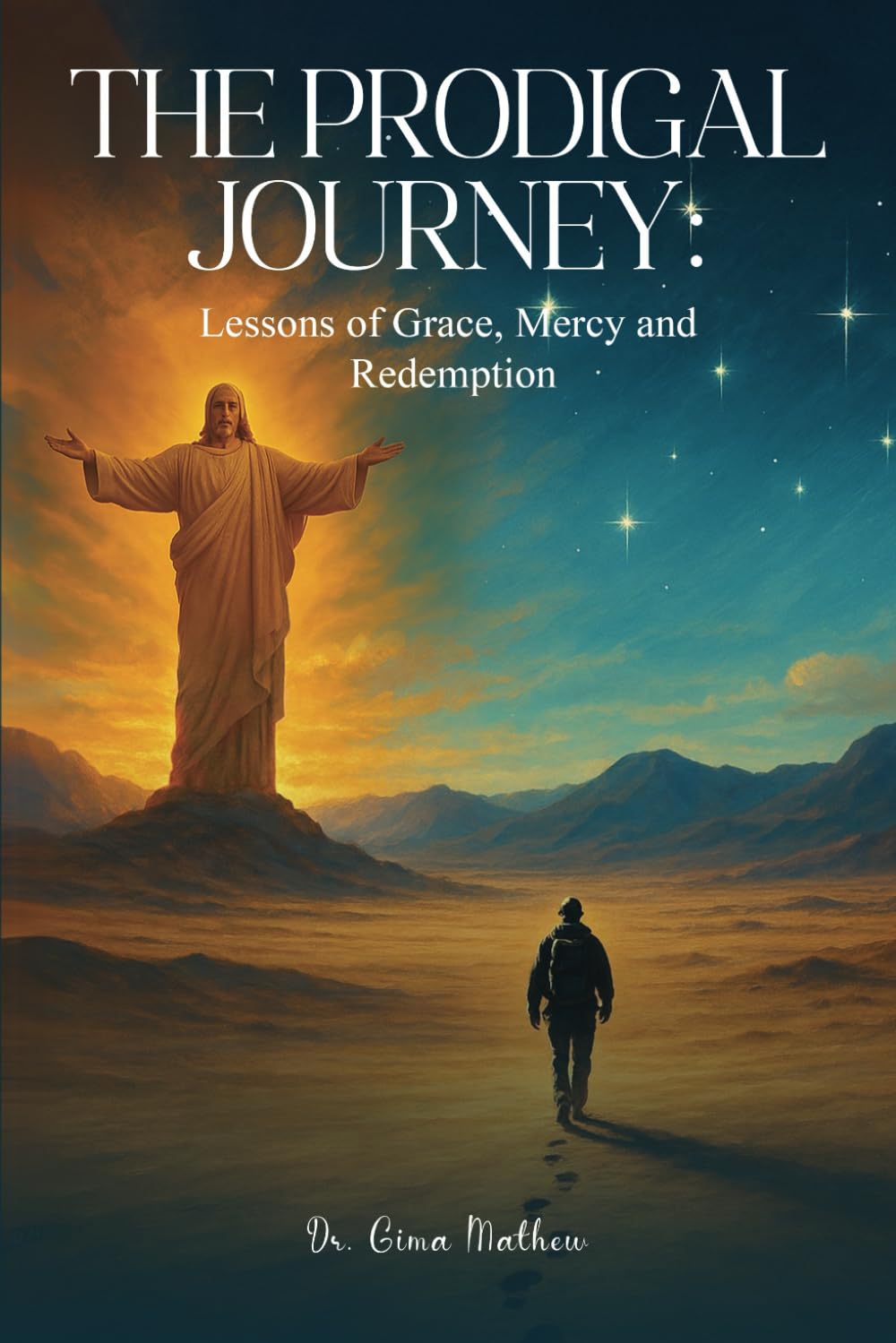
Gima Mathew’s The Prodigal Journey: Lessons of Grace, Mercy and Redemption is one such book. More than a commentary, more than a devotional, this is a heartfelt meditation on one of the most powerful parables Jesus ever told: the story of the Prodigal Son in Luke 15:11–32.
At first glance, we might think we know this parable well: the rebellious younger son, the loving father, and the bitter older brother. But Mathew invites us to pause, go deeper, and truly reflect on what this story reveals about ourselves and the God who loves us.
In her writing, Mathew provides far more than a surface-level retelling. Each chapter peels back the layers of the narrative to explore the heart, the struggle, and the transformation of each character involved. She starts with the younger son, who asks for his inheritance early, squanders it all, and ends up feeding pigs in a far-off country. His eventual return home serves as a lesson in humility, repentance, and the universal need for purpose and community.
What stands out in this book is how gently yet honestly Mathew handles the topic of human weakness. She reminds us that, like the younger son, many of us try to live apart from our Heavenly Father, only to discover how empty that journey becomes.
Perhaps the most moving part of the book is how it portrays the father in the parable. Mathew draws a vivid picture of his compassion, waiting at the gate, running toward his son, and embracing him before a single apology is spoken. The father doesn’t shame him. He restores him. Through this, the author shows the true heart of God as a loving parent who celebrates the return of the lost. This vision of God is healing, especially for readers who may struggle with fear, guilt, or doubt.
The analysis of the older brother, who stayed at home, obeyed, and yet became resentful, is equally potent. The Prodigal Journey explores the subtle sin of pride, the danger of resentment, and the illusion of entitlement in relationships.
In our own lives, many of us may resemble the older brother more than we’d like to admit. This book encourages us to reflect on our motives, our hearts, and the kind of love we extend to others. The Prodigal Journey is not a difficult read. Instead, it is a deep one. It’s perfect for anyone seeking spiritual renewal, healing from broken relationships, or a deeper understanding of God’s grace. It doesn’t preach. It invites us to be more compassionate and kind towards others and to ourselves as well.
By the end of the book, you will not only know the story of the Prodigal Son better, but also be able to see the brothers and the father in you, and more importantly, see God’s arms open wide.
This is not just a book. It’s an invitation to come home and to surrender in front of God’s grace and wisdom.
Link to the book: https://www.amazon.com/dp/B0D4X4556D.